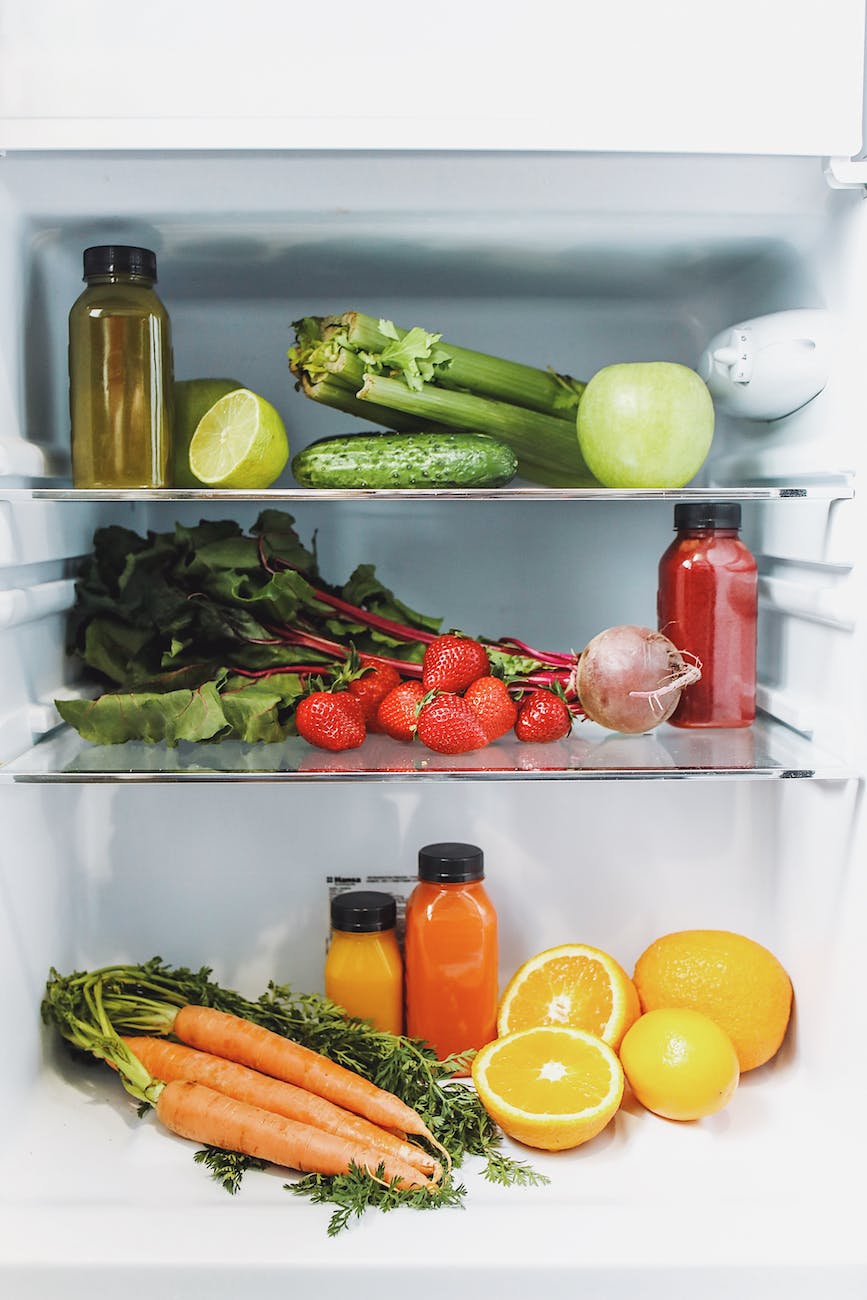

Here’s why your healthy food goes bad in the fridge even after you’ve bought it, even when you have all intention of making healthy food that week.
This happens mainly because you haven’t yet streamlined the system in which it is EASY to use and eat those foods.
No one really wants to deal with a huge bunch of raw unwashed spinach at the end of a 12 hour day. Or in the middle of it. Or any time really.
In the case where it happens more often that not that you get some produce and it goes bad in the back of your fridge, especially for perishables such as peppers, and leafy greens (spinach – the worst culprits) – it’s because of an inefficiency in your system.
That, and also more “winging-it”, or in other words, a higher tendency to be reactive rather than proactive with processing the produce.
When you buy fresh produce, place it in the fridge, it still needs further processing – washing, partitioning, chopping, grating/slicing/julienning – and that’s a separate need for brain power, which – without a system you can rely on – defaults into the task to do that being seen as too much of a hassle – it becomes ”i’ll make it next time” etc, if not outright, but at a subconscious level at the end of a long day.
Unless you have a cook/chef, -which makes it easier, but let’s work on the assumption you prepare your food majorly.
So if this keeps happening, here’s one thing you can do to solve this. Create a seamless system that works with YOUR personal preferences that makes it easy and seamless to go from produce to plate.
So easy to the point where you can do it when you’ve had a long day and don’t really have brain space to think of food and are in grab-and-go mode – but still plan on meeting your requirements.
Think of your absolute busiest most stressful day – how can you make it easier to “deal with” the produce then? Also, think about your planned or anticipated meals. The 2 must coexist because they support each other, reduce food wastage and save you time.
Proactivity is how you solve this – call it meal planning etc, that’s another separate topic, however for the purpose of this post, you’ll have to know what you recipes or meals you’re likely to have in the future.
Knowing is the first and separate stage, separate from today’s topic. Once you know what you’d like to eat, you must acquire go through the process “from thought to plate” which involves:
A) Buying/obtaining the produce
B) Preparing the produce eg washing, chopping etc
C) Storing the produce
D) Cooking the produce/putting together in the case of raw
E) Serving the produce – which you can eat right away, or store for later, freeze etc etc
Inefficiencies at any stage are easy to overlook and contribute to the overall system – especially B,C and D. So that’s where the tightening up will be. And tightening up ties back into knowing/anticipating what you’ll be eating in advance.
Not just what you plan you eat but when. Later today? For the week? For the next month?
As we get into the planning, let’s look at the overall process of any fresh produce you obtain, with intention on eating – a very broad view.
And if we talk about produce, in general there’s 4 KINDS of produce you’ll acquire:
1)fresh and whole
2)fresh and prepared eg chopped, diced, julienned, in premixed salad form
3)frozen – usually prepared eg diced
4)canned/tinned eg pickled, fermented etc
The focus is on types 1 and 2 – as they are the culprits that may die a slow death in the back of our fridges.
Example scenarios
Let’s look at a few example uses of the produce you probably have, and what the preparation would look like or need – again, depending on what you anticipate eating and when.
Situation A:
If you’ll have them raw or in salads: you’ll need to set aside time ahead to prepare them in a way that makes them assemble-ready in an instant.
Situation B:
If you are having soups and grilled vegetables, then diced/chopped or otherwise prepped and possibly stored is the way to go.
Situation C:
If you have ALOT of produce for reasons such as receiving them as a gift from a neighbor with extra greens (like my neighbour one time) – or you’ve been growing green bell peppers and you have a TONNE then you’ll need a long term storing solution eg pickling, freezing, diversifying recipes.
All the above can be made easier with a chef/cook – however if you have a meal plan or strict requirements per goal, you’ll still need to direct them on what your desired outcome of meals will look like. It’s easier however it’s always better to know how to do it yourself.
In summary, it requires forecasting of your upcoming meals and recipes that make up your majority, and then more often than not, organising the produce into a system and streamlining it to empower even your most demotivated-to-cook days.
These are just some examples of the ways of having an optimised meal system that makes it seamless for you in the context of your diet/food – just because eating healthy especially vegetables regularly without adequate planning/prep can be a limiting factor.
Getting your grocery shopping and prep ie part A and B correct and streamlining it can save you miniscule efforts that will build big habits that drive progress for you towards better health.
 Camufit Lifestyle
Leave a comment